
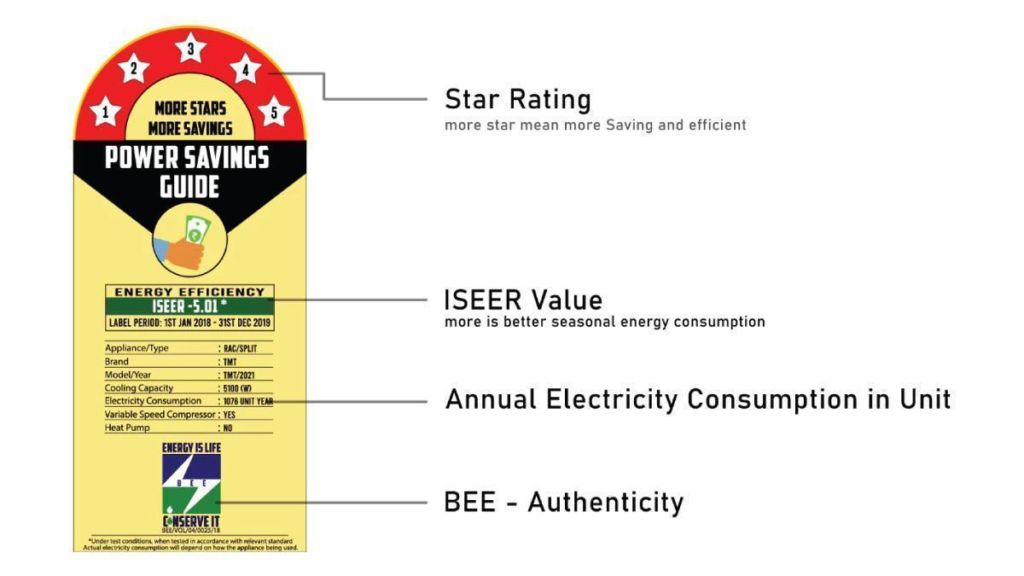
The ISEER rating 2026 update is one of the most important changes for anyone planning to buy an air conditioner in India. With new energy efficiency rules introduced by the government, the ISEER rating 2026 system will directly impact electricity consumption, star ratings, and long-term savings. Understanding this update can help you choose a more efficient AC and avoid higher power bills.
OFFICIAL ISEER RATING GUIDELINE
⚡ What Is ISEER Rating (In Simple Words)?
ISEER = Indian Seasonal Energy Efficiency Ratio
👉 It measures how efficiently your AC works across different temperatures in India.
➡️ Higher ISEER = Less electricity consumption
➡️ Lower ISEER = Higher electricity bills
That’s why your AC comes with star ratings (1★ to 5★).
📊 New ISEER Rating Chart (2026 Update)
As per the notification, here are the updated ISEER ranges 👇
⭐ Star Rating vs ISEER (2028–2029)
- ⭐ 1 Star → 3.80 – 4.29
- ⭐⭐ 2 Star → 4.30 – 4.69
- ⭐⭐⭐ 3 Star → 4.70 – 5.19
- ⭐⭐⭐⭐ 4 Star → 5.20 – 5.79
- ⭐⭐⭐⭐⭐ 5 Star → 5.80+
💡 Translation:
To get a 5-star rating, your AC now needs ISEER ≥ 5.80, which is stricter than before.
🚫 Big Change: 1-Star ACs Get Restricted
Here’s the most important update 👇
👉 From 2028 to 2029,
1-star ACs (ISEER 3.80–4.29) will NOT be allowed in:
❌ Variable capacity (inverter ACs)
❌ Multi-stage ACs
This change is aimed at pushing manufacturers toward higher efficiency standards
🔥 Why This Update Matters to You
This is not just a technical change.
It directly affects:
💸 Your Electricity Bill
Higher ISEER = Lower power consumption → More savings
🛒 Your Buying Decision
Older 3-star models today might feel like 2-star in future standards
🌍 Energy Efficiency Push
Government is pushing towards eco-friendly cooling solutions
🧠 How to Choose an AC Based on ISEER Rating 2026
If you’re buying in 2025–2027:
👉 Prefer 4-star or 5-star ACs
👉 Avoid low ISEER models (they’ll become outdated fast)
If you’re buying after 2028:
👉 Check updated BEE label carefully
👉 Target ISEER 5.2+ minimum for long-term value
⚖️ Old vs New ISEER Thinking
Before:
✔ 3-star = decent choice
Now:
❗ 3-star = average
🔥 4★ & 5★ = smart investment
💸 Electricity Savings with ISEER Rating 2026
⚡ Real-World Example (Easy to Understand)
Assume:
- 1.5 Ton Split AC
- Usage: 8 hours/day
- Usage period: 6 months/year
- Electricity cost: ₹8 per unit
🔻 Lower Efficiency AC (3-Star | ISEER ~4.0)
➡️ Approx consumption: ~1.2 units/hour
👉 Yearly consumption:
= 1.2 × 8 × 180 days
= 1728 units/year
👉 Annual cost:
= 1728 × ₹8
= ₹13,824
🔺 Higher Efficiency AC (5-Star | ISEER ~5.8)
➡️ Approx consumption: ~0.9 units/hour
👉 Yearly consumption:
= 0.9 × 8 × 180
= 1296 units/year
👉 Annual cost:
= 1296 × ₹8
= ₹10,368
💰 Total Savings
👉 You save:
1728 – 1296 = 432 units/year
👉 In money:
₹13,824 – ₹10,368 = ₹3,456 per year
🚀 5-Year Savings = Game Changer
Most people use ACs for 5–7 years.
👉 Over 5 years:
💸 ₹3,456 × 5 = ₹17,280 saved
That’s more than the price difference between a 3★ and 5★ AC.
🎯 What This Means for 2026 Buyers
With the new ISEER rating updates, efficiency standards are getting stricter.
👉 So:
✔ Today’s 5-star = Future-proof
❌ Today’s 3-star = Will feel outdated
⚠️ Smart Buying Insight
Don’t think:
❌ “I’ll save ₹3–4k by buying a cheaper AC.”
Think:
✅ “I’ll save ₹15k–₹20k over time with a better AC.”
🧠 Final Takeaway
Higher ISEER isn’t just a number.
It’s:
✔ Lower electricity bills
✔ Better efficiency
✔ Long-term savings
✔ Future-ready investment
🎯 Final Verdict
The new ISEER rating update is a clear signal:
👉 Cheap ACs today = expensive electricity tomorrow
With stricter efficiency norms coming into effect, it’s smarter to invest in higher star-rated ACs now rather than saving upfront and paying more later.