Smartphones have ruled our lives for over a decade. But 2025 may be the year we begin leaving them behind—thanks to a new generation of AI-powered wearables that promise to deliver smart-device functionality right on your body. From pins to rings and smart glasses, these devices are evolving fast.
Here are 5 AI wearables that look ready to take over the smartphone throne. 👇
1️⃣ The Humane AI Pin—The Screenless Pioneer
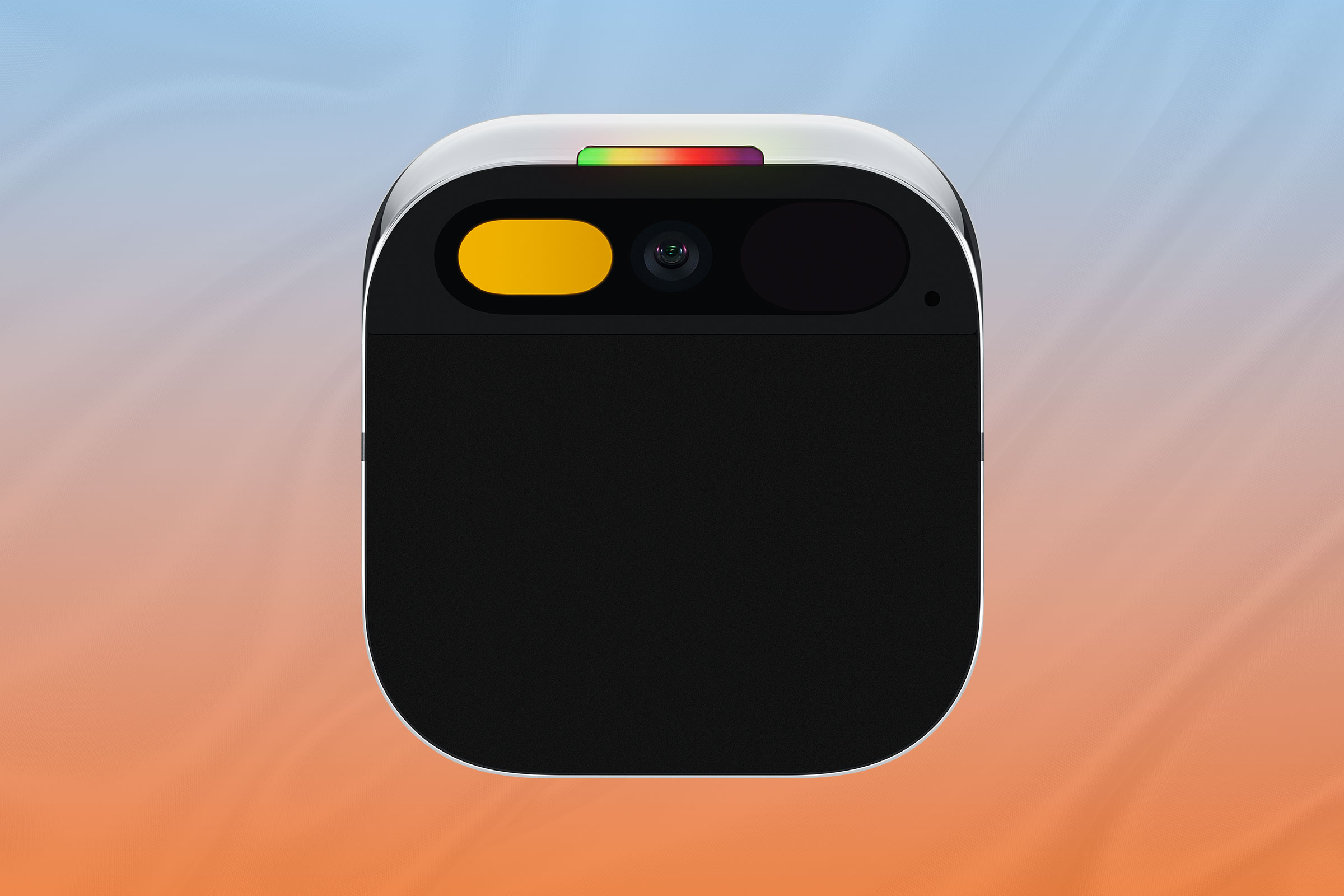
The Humane AI Pin is arguably the most famous device driving the “post-smartphone” trend. This magnetic pin uses projection technology and an always-on AI assistant to handle calls, messages, search, and translation entirely hands-free.
Core Feature: A “Trust Light” indicates when it’s recording, addressing privacy concerns directly.
Why it could replace your phone: It is designed from the ground up to eliminate the need to look at a screen. If your phone’s main use is calls, quick searches, messages, and music control, the PIN does it faster.
2️⃣ The Rabbit R1—The Pocket-Sized AI Agent
The Rabbit R1 represents the second major push into this space. It’s a dedicated, orange AI assistant with a small screen and a rotating camera. It operates using a Large Action Model (LAM) that learns to use apps for you.
Core Feature: The LAM can perform complex tasks via voice commands (e.g., “Order me a large pizza for delivery” across multiple apps) without you ever touching an app icon.
Why it could replace your phone: It replaces the tedious app-based UI with a seamless intent-based UI. For people whose time is spent managing apps, the R1 automates the work.
3️⃣ Meta / Ray-Ban Smart Glasses (AI + AR Eyewear)—See the World Through Smart Lenses
AR smart glasses are quietly becoming a viable communication and information tool. Modern versions include AI agents that can overlay information on your vision, provide navigation, real-time translation, live captions, and notifications—all hands-free.
Core Feature: Seamless integration of AI answers and information directly into your visual field.
Why it could replace your phone: Forget pulling out the phone for directions, messages, or translations—smart glasses can project info directly in your field of view. For daily navigation and quick checks, they are already a rival.
The smallest, most discreet form factor is the smart ring. While primarily health and sleep trackers today, the next generation will integrate voice commands, gesture control, and context-aware AI for silent notifications and reminders.
Market Trend: The wearable-AI market is projected to grow from $48.8 billion in 2025 to $260 { billion by 2032}, showing just how fast this shift is happening.
Why it could replace your phone: When AI wearables become truly invisible—smart enough, compact enough—they can handle communication, payments, and context-aware assistance silently and discreetly.
5️⃣ Advanced AI Smartwatches (Voice & Health Hubs)
Wearables with advanced sensors and powerful AI are evolving beyond fitness tracking. In 2025, AI smartwatches can handle complex health monitoring, notifications, and task reminders and are adding more sophisticated, voice-first AI agents.
Core Feature: They act as a health and safety hub, combining notifications with critical biometric data.
Why it could replace your phone: For people whose phone use is mostly calls, messages, health tracking, and basic tasks, a powerful AI watch may soon offer enough convenience and health features to justify leaving the phone at home.
AI Wearables 2025 Comparison Table
Feature
1. Humane AI Pin
2. Rabbit R1
3. Ray-Ban Meta Smart Glasses
Form Factor
Magnetic Clip/Pin (Clothing-based)
Small, Pocket-sized Device with a Screen
Eyewear (Sunglasses/Prescription)
Primary Interaction
Voice-First (Always listening or touch-to-talk)
Voice & Touch (Push-to-talk button and scroll wheel)
Voice Command (“Hey Meta, look at…”)
Core AI Model
Humane’s own AI Operating System (Cosmos)
Large Action Model (LAM) (Learns to use apps for you)
Meta AI (Trained on Llama 3)
Visual Output
Laser Projection onto your hand or surface
Small 2.88-inch Touchscreen
Audio & Companion App (No display/projection)
Vision/Camera
Yes, built-in camera to “see” the world
Yes, Rotating Camera (for Vision/App actions)
12MP Ultra-Wide Camera (for photos/video/AI context)
⚠️ Will AI wearables replace smartphones entirely?
Not yet. Smartphones remain powerful, universal, and flexible. Some immediate challenges for AI wearables include:
Battery life & processing power limitations.
UI Restrictions—small displays or no display at all.
App compatibility and ecosystem maturity.
Privacy Concerns (always-on microphones, data capture).
Still—as AI wearables improve, for many use-cases (notifications, communication, health, reminders), they’re getting close to replacing smartphones.
Frequently Asked Questions—Future of AI Wearables
🤖 Will AI wearables replace smartphones entirely?
Not immediately. But for many people, yes—soon for:
✔ Messaging ✔ Voice assistance ✔ Navigation ✔ Productivity + Reminders ✔ Health and activity tracking
Smartphones will still be needed for:
Heavy apps (editing, gaming, content creation)
Large-screen media consumption
Complex multitasking
Prediction: 📌 By 2030, early adopters may fully switch to wearable-only systems 📌 By 2035–2040, smartphones could become optional for most users
Wearables are the future of personal computing—small, invisible, and AI-driven.
🔥 Best AI Wearables 2025
Type
Example
What They Replace
AI Smart Glasses
Meta / Ray-Ban
Screen + Notifications
AI Pendants / Pins
Bee, Plaud
Voice assistant + Notes
AI Smartwatches
Pixel/Apple watches
Messaging and Health apps
AI Smart Rings
Oura-style concepts
Fitness + Authentication
Gesture-Control Bands
Neural Wearables (coming)
Device control + UI
These gadgets are built around conversation and intelligence, not screens.
📱 Future of touchscreens and AI
Touchscreens won’t disappear instantly, but:
🧠 AI Interaction → Voice + Vision + Smart Context 👋 UI Gesture Control → Move hands instead of tapping 🥽 AR Overlays → Info in front of your eyes, not on a phone
⚙️ How do AI wearables work without apps?
They use:
Cloud-based AI models
Voice interaction
Context awareness (location, camera, sensors)
Automatic actions → No manual browsing
Instead of app icons, devices unlock capabilities automatically:
Example: If you’re speaking the AI auto-notes, summarizes, and reminds If you’re walking AI navigates If you’re exercising, AI tracks stats
🌟 Final Takeaway
AI wearables aren’t here to take your phone away…
They’re here to make you need it less every single day.
![Rabbit R1 Smart Revolutionary AI Device Orange [leucht Orange] with BT 5.0 & 4G/LTE SIM Support [2.0 Updated Version] : Amazon.in: Electronics](https://m.media-amazon.com/images/I/41VvMC6SWTL.jpg)

